
Situationgooning
We don't want to log off, we want to watch as many screens as possible at once
Last Friday, Polymarket opened a bar in Washington DC called The Situation Room, “the world’s first bar dedicated to monitoring the situation.” The images posted in the announcement thread featured screens full of feeds, tickers, chyrons, all manner of scrolling information, as well as large orbs positioned throughout the bar (maybe when your eyes get tired from reading text on a distant screen, you just stare at the orb?). It’s unclear whether the timing was intentional, but last Friday was also the beginning of college basketball’s March Madness tournament, which famously crams 32 games into a 36-hour stretch on its opening Thursday and Friday—the most important time of the year for degenerate sports consumption, hanging out at bars with way too many TVs, leaving work at 1pm for a fake reason, and falsely believing that it’s possible to watch four basketball games at the same time. From the promotional images, it doesn’t appear that any of the TVs at the Polymarket bar had March Madness on, so the lads of DC had to self-sort, validating my long-held belief that if you’re not a fan of sports, you are doomed to watch the news in the same way, which is much worse. It turns out the Situation Room apparently didn’t even have internet last Friday, so instead of all the live feeds and Bloomberg terminals, there were “free fruit kabobs and room-temperature red wine in apology,” as reported in Feed Me. “After spending three nights at the Polymarket Situation Room pop-up in Washington, DC” the contributor writes, “I’ve come to the conclusion that aspiring insider traders are worse than actual ones.” It’s all a LARP, after all. The people watching basketball at least know they’re not in the game. And anyway, we have Twitter at home. As fascinated as I am, I would probably stay the hell away from this place.
Around the new year, I was hearing a lot of predictions about how offline is the new online, and how people were finally detaching from the internet and hoping to build up their neglected IRL identities (I was reading these predictions online, of course). Some people are indeed doing this successfully and thriving—no one actually knows because we don’t hear from them anymore—but I’m skeptical that this is happening at sufficient scale to constitute a trend. I am least confident that enough other people are ratcheting up their digital intake to offset anyone else’s reduced internet diet. As much as the Polymarket Situation Room annoys me, I have to at least acknowledge that they’re dialed into the zeitgeist. It’s not so much that people want to log off as that they want to be on the internet together, or somewhere other than alone in front of a laptop on their couch at home—again, a form of communal viewing that sports fans have always had access to. This is also why so many newsletters and internet presences have introduced in-person events, which generally seem quite popular: People understand that they are always on the internet, even when they’re not looking at a screen. Might as well embrace it.
Indeed, “monitoring the situation” is surely the real trend of 2026 so far, and now that we have that term, we can starting designing the world accordingly. Perhaps one person staring at one screen is an obsolete modality, one that has seen little innovation since the iPhone debuted. How might we optimize our intake? When the Apple Vision Pro came out two years ago, I noted that it was often being used to look at more screens in virtual space, and I have also argued that screens don’t appear in our dreams because the dream implies that we are already inside of the screen. Already well accustomed to managing multiple feeds and tabs on our personal devices, or watching movies while scrolling, the market is now responding by recognizing that a single person can be worth more than two eyeballs, and that the existing media environment hasn’t yet optimized the amount of information that can be stuffed into us. We’ve had 24/7 cable news our whole lives but now we have similarly round-the-clock markets and their derivatives, always fluctuating and updating, of which Polymarket and its ilk are most representative. A couple of months ago, Reggie James built a “situation monitor dashboard for the boys,” suggesting the business model of “making every man feel like he’s in the situation room for $50/month.” Borrowing so much of its aesthetic from sports gambling, again, the north star for situation monitoring is not just the 20th-century control room but the casino sportsbook, which truly fulfills the dream of wall-to-wall screens and their relevant metadata (a perfect setting in which to watch March Madness by the way), and the possibility that you could not just absorb it all but actually act upon it—that you, as a human, and not a computer, could take in all that extra information and then do something useful with it. In the meantime, until we figure out what that something is, we’ll keep monitoring.
Become a paid subscriber to access more essays (about half of Kneeling Bus posts, and many of the best ones, are for paid subscribers only), or just because you appreciate this newsletter and want to support it.
Reads:
Sam Kriss hangs out in San Francisco and reports on the tech zeitgeist for Harper’s. A good examination of what “agency” means to the people who love saying it.
An ode to plugs and cords by the great For Scale newsletter. “It is completely swagless of an experience to tap a lamp accidentally and have it blast a new level of light, or turn off completely.”
A polemic against the usage of “-bro” terminology. “The ambiguity appeals to the essential paranoid fantasy of the internet, that a mass of similarly behaving others are conspiring against you, and that you are not one of them even though you do a lot of the same things.”
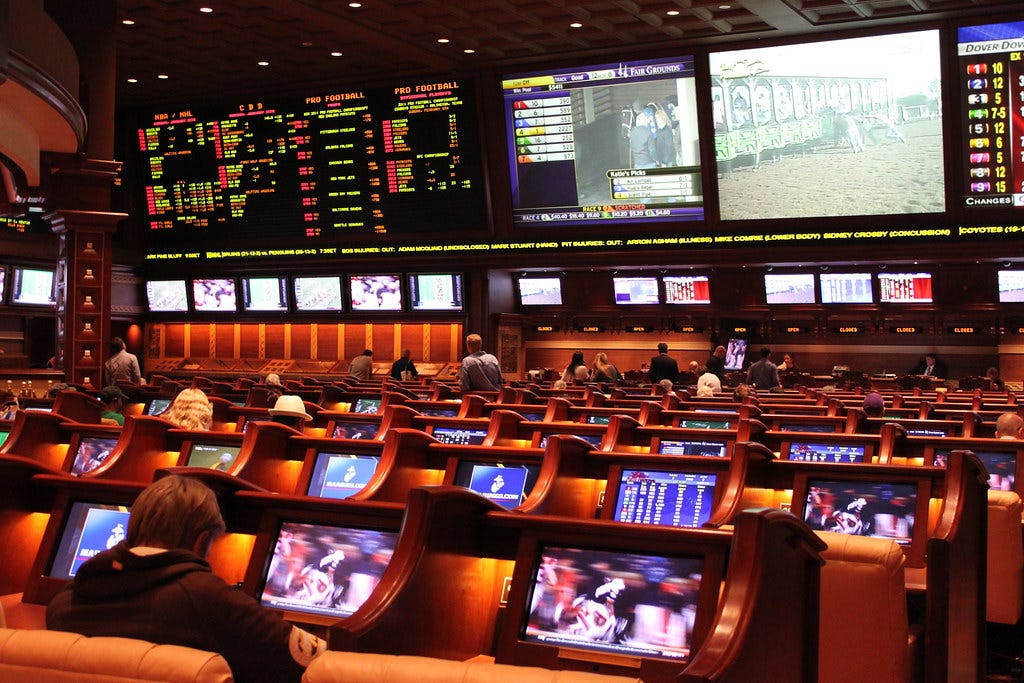
The Situation Room: ESPN Zone but for the 2020s https://en.wikipedia.org/wiki/ESPN_Zone
Everyone wants to be Ozymandius from Watchmen.